UNIT 19 · Case Study
LeetCode Study
A LeetCode study log kept as GitHub Discussions and published with Repozine, plus a Claude Code plugin that gives one hint level at a time instead of handing over the answer.
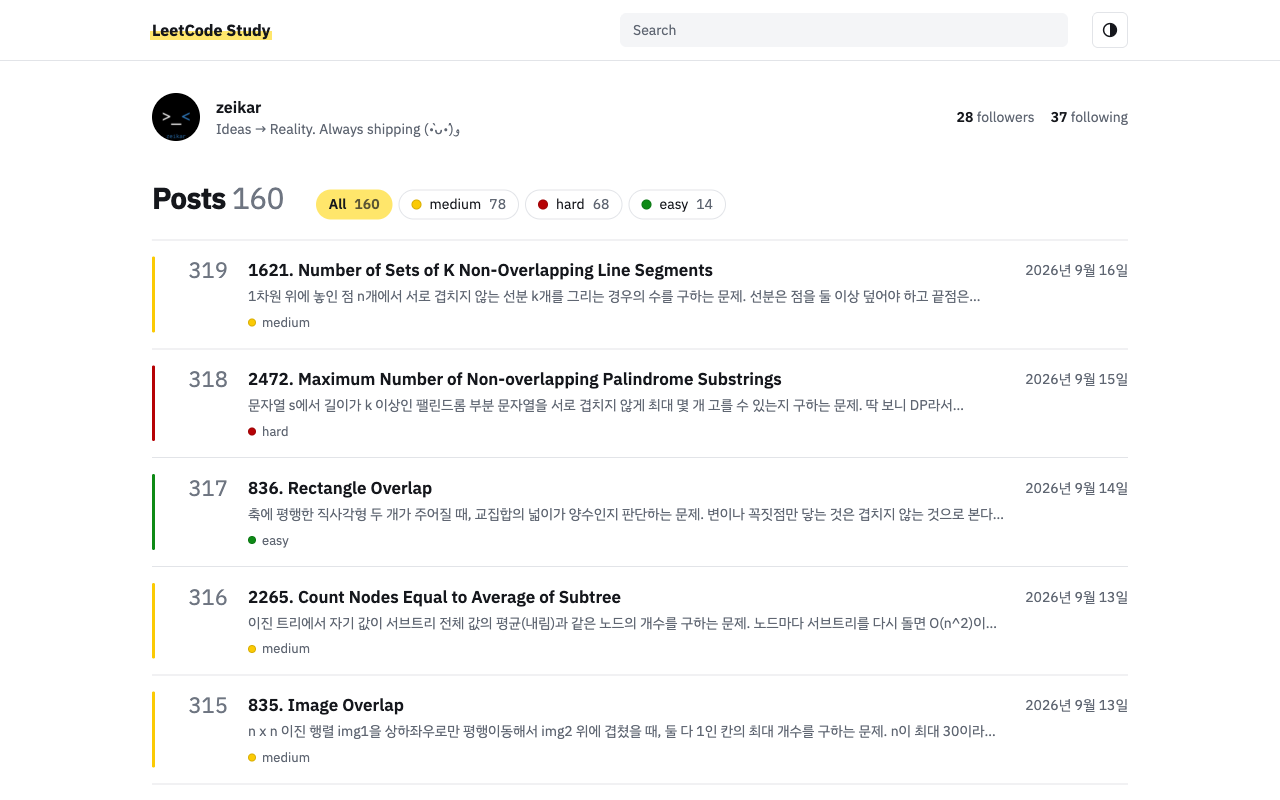
A study log that has been running since 2021, and the tool that made it work. Every problem has two halves: a solution file in the repo, and a study note covering what the problem asked, what was tried, what failed, and why the working idea works. The notes are written in Korean and published at zeikar.dev/leetcode.
The log
The notes live in the repo’s GitHub Discussions, so writing one is just opening a discussion. Repozine builds them into a static site with search and difficulty filters, and redeploys whenever a note or a comment changes.
Two notes-to-code links keep the log honest:
- The solution must match its note. A CI check compares each file in
solutions/against the code block in its discussion and fails if either side went stale. - The index is generated, not maintained. A workflow regenerates the solved-problems table in the README from the notes, so the count and links never drift from what was actually written.
leetcode-study, the Claude Code plugin
Every AI coding tool is built to finish the problem for you, which is the one thing you don’t want when the problem is the point. The plugin makes Claude give one hint level at a time, then stop and wait:
- 0 — What have you tried? Nothing is given before this is answered.
- 1 — Does the problem say what you think it says?
- 2 — What do the constraints allow?
- 3 — The one observation the rest turns on, put as a question first.
- 4 — Implementation, pseudocode before code.
Topic tags are held back until level 2, because “Dynamic Programming” collapses most of the search space on its own and can’t be un-seen. A wrong submission gets the smallest input that breaks it, found by brute-forcing against your own code, rather than a rewritten function. The bug stays yours to find.
A small lookup script resolves a number, slug, URL, or daily against LeetCode’s GraphQL API in one request.
/plugin marketplace add zeikar/leetcode
/plugin install leetcode-study@leetcode-study
Recording a solved problem is a separate, repo-local skill: it creates the note before the file so CI never sees an orphan, and drafts in the voice of the notes I wrote by hand, measured against them rather than guessed.